Sunday, 6 May 2012

6th May 2012 Kingfisher Park Birdwatchers Lodge


32mm of rain fell over the last two weeks on 6 rain days. Most of the other days were sunny and very pleasant. The minimum temperature was down to 17.1ºc and the maximum up at 25.4ºc. The humidity was quite high and varied between 74% and 96%.

Bird species were for the week before last were 94 seen and 6 heard, this last week sightings were 87 seen and 3 heard. 23 mammal and reptile species were seen plus and Striped Possum was heard and 1 frog species heard. The last two weeks bird lists are on the Eremaea Birds & Eremaea Birds website and morning walk lists can also be found at this link on Eremaea Birds

Highlights:
A Red-backed Button-quail was rescued from a water trough in one of our neighbours yards, it was looked after overnight and successfully flew off in the morning. This is a very rare sighting in our recording area of 1.5km from the Lodge, there has only been one or two records previously. A Little Kingfisher was in the two pools adjacent to the orchard, first sighting was on 30th April at the Crake Pool and the next was on 2nd May at the other pool at the bottom of the track from the units where it was again on the 4th May. Noisy Pitta were actually showing themselves. At least two are calling regularly mainly in the morning for at least 30 minutes and again in the evening for shorter periods.

A green Tree Snake got a surprise one morning when the branch it was on fell down into the feeding area beside the reception. The snake quickly beat a hasty retreat back into the nearest tree.

We now have a trained Laughing Kookaburra who directs traffic into the Lodge grounds from the Rex Highway!

Laughing Kookaburra - on duty!

Other sightings:
Waterbirds seem to be coming and going in the district and are still in low numbers. McDougall Road lagoons have seen Wandering Whistling Duck (9), Hardhead (2), Australasian Grebe (1), Australasian Darter (2), Little Pied Cormorant (1), Little Black Cormorant (10+), Intermediate Egret (1), Cattle Egret (100's), White-faced Heron (1), Purple Swamphen (2). So you can see very low numbers. 

Brown Cuckoo-Dove have been around feeding on the fruits of the Tobacco Bush


Brown Cuckoo-Dove

and Bar-shouldered Dove have started displaying. 

Bar-shouldered Dove

A few Topknot Pigeon showed up for a day then disappeared and two female Superb Fruit-Dove were seen in the rainforest on the edge of the orchard along with Wompoo Fruit-Dove. Seven species of raptors have been around, once again few in numbers with one Pacific Baza and a Grey Goshawk seen flying over the lodge. An immature White-bellied Sea-Eagle was soaring over the adjacent cane field one morning before heading towards the local fish farm. Red-necked Crake are calling in the evening but still elusive with no sightings but there was a Pale-vented Bush-hen sighting in our neighbours garden as well as regular calls coming from behind their property. Three Bush Stone-curlew have been roosting during the day in the nearby nursing home grounds and have been joining with their mates to call most of the night. Masked Lapwing have been gathering around the cane fields with a group of eight being the most seen together. Rainbow and Scaly-breasted Lorikeet have been seen going into tree hollows in Geraghty Park but it is not known whether they are breeding. Double-eyed Fig-Parrot have only been seen flying over and most of the cuckoos have left the area. We only heard a Channel-billed Cuckoo two weeks ago but there have been regular sightings of Little Bronze-Cuckoo (Gould's) around the Lodge and in Geraghty Park. Eastern Barn Owl have started to call a lot in the evenings which maybe the start of courting behaviour; there has been at least four pairs around the local area. There has been six species of kingfisher in and around the Lodge including one Buff-breasted Paradise-Kingfisher adult who has been see as late as 5th May (this sighting equals the record for a late departure at the Lodge) which has pleased the guests! 

Buff-breasted Paradise-Kingfisher


Blue-winged Kookaburra have also become very vocal lately trying to compete with the more common Laughing Kookaburra mainly early morning. Rainbow Bee-eater are still around and Spotted Catbird have been coming to the reception area feeder. Lovely Fairy-wren have been in our neighbours garden and Red-backed fairy-wren have been along McDougall Road. Striated Pardalote have been very vocal and coming down to the drain they were seen foraging in a few weeks ago; it's possible they are looking to nest in the bank but we have not seen any signs of digging yet. Eleven species of honeyeater were recorded over the last two weeks including Brown-backed who have been absent for a month. Both Barred Cuckoo-shrike and Cicadabird have been heard but not seen. At least two Yellow Oriole have been around and one adult Black Butcherbird has been around the Lodge grounds. At least two Spangled Drongo are still with us and have not headed north yet. Rufous Fantail numbers appear to be increasing and our first Grey Fantail for the season appeared on the 29th April in the Lodge grounds (they had been in the area for a few days before this sighting). Several Northern Fantail have been in the Lodge grounds and Geraghty Park with four seen on one morning walk. 

Northern Fantail


Spectacled Monarch have been very active and showing well and even posing for a photo occasionally. They are a very common species around the Lodge but flit around and don't stay still for very long making them difficult to photograph. 


Spectacled Monarch

Pied Monarch have been active and showing well as have the Yellow-breasted Boatbill. Grey-headed Robin numbers have continued to increase which is always nice as they have a great range of calls, usually to wake us up in the morning with! Metallic Starling are still around and appear to be all juvenile birds, flocks of around 20 have been flying around. Red-browed Finch continue to add to several nests around the Lodge.

Further Afield:-
A fruiting fig alongside Rifle Creek in Julatten provided a feast for many birds over the last two weeks. Those recorded in the tree included, Wompoo Fruit-Dove, at least 8 Superb Fruit-Dove, 20+ Double-eyed Fig-Parrot, Spotted Catbird, Satin Bowerbird, Lewin's, Yellow-spotted, Yellow-faced and Macleay's Honeyeater, White-bellied Cuckoo-shrike, 30+Barred Cuckoo-shrike, Varied Triller, Golden and Grey Whistler, Little Shrike-thrush, Australasian Figbird, Yellow Oriole, Grey and Northern Fantail, Willie Wagtail, Black-faced Monarch (1), Spectacled Monarch, Yellow-breasted Boatbill (2 males + 1 female), Pale-yellow Robin, Silvereye, Metallic Starling and Olive-backed Sunbird - quite an impressive list. 

Barred Cuckoo-shrike

Like most fig trees it is impossible to guess when they are going to fruit, in 2009 this tree fruited in September. Some trees fruit each year but usually not at the same period whilst others fruit spasmodically and not every year. Del Richards from Fine Feather Tours reported an Australian Bustard on the corner of the Rex Highway and Euluma Creek Road in Julatten which is an unusual location, he also reported Topknot Pigeon and a Pied Heron at Port Douglas which are uncommon here. Radjah Shelduck were again at the Wonga Beach Barramundi Farm which is becoming a regular spot for these birds. This is private property with no access into the farm but it maybe viewed from the road alongside it. 

Radjah Shelduck

Brady Road Swamp near Mareeba had some interesting birds including good numbers of returning Australian White and Straw-necked Ibis, Glossy Ibis and a juvenile Black-necked Stork. The full list can be found on the Eremaea Birds website.

Mt. Lewis has again excelled with an adult Southern Cassowary sighted on the road about 200m past the Bushy Creek bridge, it did not hang around and took off into the forest at a rapid rate of knots! Blue-faced Parrot-Finch have become difficult to find with no sightings in the past two to three weeks which may mean they have left the higher ground and are coming off the mountain however there has been no sightings at lower altitudes yet. There were at least two sightings of male Golden Bowerbird along the road and on the track to the old miners dam. A Large-tailed Nightjar was calling one evening along Euluma Creek Road, Julatten (not far from Mowbray National Park). We only have three records of calling Large-tailed Nightjar in May, 1998 at Kaban on the Atherton Tableland, 2000 at Redden Island in Cairns and at Euluma Creek Road in 2011. Our other 39 records from the region are nearly all from August to December.

Reptiles and Mammals:-
A Leaf-tailed Gecko was seen high up in the canopy whilst on a night spotlighting trip. It turned around whilst we were watching it and raised its tail into the air so we got good looks at the underside which is something that does not happen very often, this is usually a threat posture to another gecko but we only saw one. A Feather-tailed Glider (about the size of a House Mouse) was seen on several nights in a Coconut Palm feeding on some of its flowers. A Yellow-footed Antichinus (small placental mammal a bit bigger than a House Mouse) returned to the veranda outside the units after being absent for several months. It tried setting up camp under one of the chair covers but was soon returned to the rainforest. Unlike most of the other small mammals we have (Fawn-footed Melomy's and Bush Rat) the antichinus are quite active during the day.
  

Other Happenings:- 
It's amazing what you see when looking skywards for birds, this is just one example.

Qantas Jet overflying Lodge

Sunday, 22 April 2012

22nd April 2012 Kingfisher Park Birdwatchers Lodge


75.5mm of rain fell over the last two weeks on six days, in between the rain were some great sunny and very pleasant days. The minimum temperature was down to 18.8ºc and the maximum up at 26.6ºc. The humidity varied between 66% and 96%.

Bird species were for the week before last 94 seen and 9 heard, this week 85 seen and 5 heard. 18 mammal and reptile species were seen including six frog species over two weeks. The last two weeks bird lists are on the Eremaea Birds website and morning walk lists can also be found at this link on Eremaea Birds

Highlights:
Over the last two weeks an unusual visitor was seen on the Lodge grounds, a Pallid Cuckoo, this was the first sighting since May 2011 and only the third in seven years. A Magpie Goose was sitting on a nest on one of the McDougall Road swamps and an Australasian Grebe made an appearance at the Barramundi Gardens fish farm.

Other sightings:
Brown Cuckoo-Dove have returned to be regularly seen in the orchard and both Wompoo Fruit-Dove plus Superb Fruit-Dove were heard but not seen around the Lodge. A flock of at least 20+ Topknot Pigeon were flying over the nearby nursing home one morning after being absent for a few weeks. A Black-necked Stork was seen flying over McDougall Road one afternoon and Cattle Egret numbers have been increasing each week with just about every paddock with cattle in having at least one individual by its side. Raptor sightings have been slow but some species are returning with the regulars Whistling Kite, Black Kite and White-bellied Sea-Eagle being joined by a Brown and a Grey Goshawk, a pair of Australian Hobby and two Black-shouldered Kite. 
 

Black-shouldered Kite


Red-necked Crake have been calling intermittently in the evenings at dusk but not seen however Pale-vented Bush-hen have been seen in our neighbours backyard. A pair of Double-eyed Fig-Parrot were foraging in a flowering eucalypt in Geraghty Park one morning along with many Rainbow and Scaly-breasted Lorikeet. A juvenile Pheasant Coucal was on the ground alongside the cane paddock whilst we were out on a morning walk and at least two Channel-billed Cuckoo were seen flying over the adjacent cane paddock; this is getting late in the season for them to be still with us. Eastern Barn Owl are being seen and calling well at the moment unlike Sooty Owl who are not calling. An Azure Kingfisher has been around the edge of our orchard in the rainforest foraging in wet season ponding whilst fewer Buff-breasted Paradise-Kingfisher are around with sightings of three or four individuals. Blue-winged Kookaburra have become noisier than normal and were spotlighted one evening perched in Geraghty Park calling in the dark. Rainbow Bee-eater are around in small flocks but Dollarbird have nearly all left apart from one or two juveniles being sighted in the area. 


Dollarbird - juvenile

Noisy Pitta continue to be noisy, calling mainly in the morning and evening with the occasional squawk during the day but proving elusive with no sightings. A Great Bowerbird showed up in our neighbours garden one day much to their surprise as they don't normally venture this far along Mt. Kooyong Road but the Lovely Fairy-wren do and have been seen in their garden regularly, usually late afternoon.

Striated Pardalote were seen on a morning walk behaving in an unusual manner. Four birds were foraging on the ground in a drain at the side of the road along with a Lemon-bellied Flycatcher who was on the road and a party of Silvereye. Pardalotes and the flycatcher are normally high up in the trees foraging so being low down was a great opportunity to get great views of them. We looked to see if they were foraging on anything but could not find any obvious food item.

Honeyeaters have been good over the last few weeks with at least 14 species being seen, this is due mainly to the flowering eucalypts in Geraghty Park attracting some of the less frequent visitors such as Bridled Honeyeater, White-cheeked Honeyeater and Noisy Friarbird. A rare opportunity arouse to take a few images of this White-throated Honeyeater who came down from the tops of the eucalypts to get some nectar from this grevillea at eye level. 
 

White-throated Honeyeater


Also in the same grevillea, a White-bellied Cuckoo-shrike was seen to eat part of the flower.


White-bellied Cuckoo-shrike


Cicadabird are still calling but hard to see however Grey Whistler have become easier to see as they are calling well, mainly in the morning. Yellow Oriole which is an infrequent visitor from the coast have been around for a few weeks but only one or two birds, however the more normal oriole species here which is the Olive-backed have become more scarce with only a juvenile bird being seen. Rufous Fantail numbers have increased and a few Northern Fantail are continuing to hang around in and around the rainforest whereas they should be out in the open woodland! The odd Leaden Flycatcher and Black-faced Monarch are still around the area although they have not been seen in the Lodge grounds. Pied Monarch and Yellow-breasted Boatbill have been heard and seen regularly. Grey-headed Robin are calling well in the rainforest but have been difficult to observe on occasions. Metallic Starling have been flying around in flocks of up to 40+ birds with about two thirds of them juveniles. A male Red-browed Finch was seen displaying with a feather in its mouth hopping around on the ground trying to impress a mate, other red-brow's have been observed building several nests around the Lodge grounds and Geraghty Park.


Red-browed Finch


Further Afield:-
Of note was a Spotted Pardalote photographed by one of our guests at Maryfarms, north of Mt. Molloy on the way to Mt. Carbine in dry open woodland. In our region this species is usually found in wetter open eucalypt forests at higher altitudes on the Atherton Tableland further south from this sighting.

Mt Lewis has been good over the last few weeks with most of the endemics being seen; Fernwren, Atherton Scrubwren, Mountain Thornbill, Bridled Honeyeater, Grey-headed Robin, Chowchilla, Bower's Shrike-thrush, Pied Monarch, Victoria's Riflebird, Tooth-billed Bowerbird and a couple of male Golden Bowerbird sightings. Macleay's Honeyeater was the only one of the endemics not seen on the mountain but you don't have to go there to see them as we have them all over the Lodge grounds! 
 

Macleay's Honeyeater


Other interesting birds reported on Mt. Lewis included Chestnut-breasted Cuckoo, Barred Cuckoo-shrike, Blue-faced Parrot-Finch and unusually a Yellow-faced Honeyeater, a species usually found at lower altitudes here.

On Monday 6th April six White-throated Needletail were seen heading north over Mt. Molloy late afternoon. Also in Mt. Molloy six Grey-crowned Babbler were seen squeezing into a night-time roost (they build their own roosts which some people mistake for nests) after being harassed by Blue-faced Honeyeater .

Not a local but we thought you might like to enjoy this Mallefowl we saw on our recent trip to Victoria.


Mallefowl


Reptiles and Mammals:-
The best sighting over the last two weeks was a Feather-tail Glider in a Coconut Palm (the only one in the Lodge grounds), it was briefly seen disappearing into one of the fronds stems. Both Striped and Green Ringtail Possum have been hard to find unlike the Boyd's Forest Dragon with at least four individuals seen. This one has been brave enough to come to the feeder for banana and avoid the attentions of the Macleay's Honeyeater.


Boyd's Forest Dragon - at the dinner table!


Frogs have been calling but not showing well but we have managed to see six species plus heard Striped Marsh Frog. Our next door neighbour, Carol (our local bird guide), had an interesting observation when she saw a Water Rat dead on the Mt. Lewis Road about eight kilometres up from Bushy Creek. It was complete with no obvious marks on it, no idea how it got there.

Other Wildlife:-
A female Hercules Moth was found roosting during the day on a vine next to a tree trunk in the camping ground one morning. It was only discovered because the birds were going crazy, squarking and giving alarm calls which alerted us. This species of moth has round markings on its wings which look like eyes and probably fooled the birds into thinking it was something a bit more sinister! As usual the Pale Yellow Robin was orchestrating the harassing with Yellow-spottted Honeyeater and Large-billed Scrubwren amongst the other birds joining in. The noise went on for more than 30 minutes before they all gave up and left the moth in piece. Just in case you have forgotten what fungi looks like here is a reminder!


Fungi sp.

What Else Has Been Happening:-
We had a visit from three journalists this week as part of a promotion for Bird Trails Tropical Queensland and a new App. which you can download for free and put onto your Iphone, iPod touch and iPad.as long as you have iOS 3.2 or later installed. App.download

As the blurb says “Get your hands on the latest information, bird descriptions, GPS enabled directions to the regions’ bird sites, recommended birding lodges, local birding tour guides, cruises and tours. You will also find locations, images and calls of many of the regions birds, including the 12 endemics.

The app has been developed to assist you to travel through the Tropical North Queensland region from South of Townsville through the Cairns, Daintree and Atherton Tablelands (Cairns Highlands) regions. It will guide you to the best birding locations, the nearest sites where your targeted species can be found and a host of bird specialist accommodation and tours.”

Members of our Birding Cluster (local bird specialist accommodations, bird guides and bird tour operators) hosted the journalists, Ed who writes for the Australian Birdlife magazine, Mike from the UK who is Assistant Editor of Bird Watching magazine and Hugh from the USA who is Science Editor at the Cornell Lab of Ornithology and is writing for Cornell's quarterly magazine Living Bird. They had a great time visiting us all, in Kuranda, Daintree Village, Julatten, Mt. Molloy, Mareeba and the Atherton Tableland, to be shown that our region is the best birdwatching destination in Australia.

Monday, 9 April 2012

8th April 2012 Kingfisher Park Birdwatchers Lodge

Here we are back at the Lodge after a few weeks away in Victoria more about that later.
Whilst we were away we missed most of the rain, 599mm for March. This last week was completely dry with the humidity dropping to an unprecedented 49%! However it still got up to 94%. Temperatures were down to a cool 16ºC and up to a pleasant 27.7ºC

Kath and Dave, who were looking after the Lodge, kept the bird records along with our roaming neighbours Carol and Andrew. We've put these records onto the Eremaea Birds site. It has been a time of change over the last few weeks with some bird species leaving and others arriving. Lewin's Honeyeater and Grey-headed Robin were amongst those that arrived from higher altitudes whilst Brown Gerygone were not recorded and most of the Metallic Starling appear to have headed north, Rainbow Bee-eater had just left Victoria when we arrived and then turned up in Julatten about two weeks later. 
 
Rainbow Bee-eater

Notable sightings in that period were a Pale-vented Bush-Hen with a chick, a Latham's Snipe out the back of the local nursing home on the edge of a cane paddock and Black-chinned Honeyeater (Golden-backed form). One week had a record number of honeyeaters with 14 seen and one heard.

Birds recorded this week were 94 seen and 8 heard. 18 mammal and reptile species were seen and two frog species heard. The weeks bird list is on the Eremaea Birds website and morning walk lists can also be found at this link on Eremaea Birds

Highlights:
A Tawny Frogmouth turned up in Geraghty Park roosting 2m off the ground and being harassed by other birds. This is the first of the non red morph we have seen in the area since about 2008.  A female Superb Fruit-Dove was seen high up in the rainforest fringing the orchard and a pair of Black-shouldered Kite were seen carrying nesting material to a nest along McDougalls Road. Black-chinned Honeyeater (Golden-backed form) were also along McDougalls Road.

Other sightings
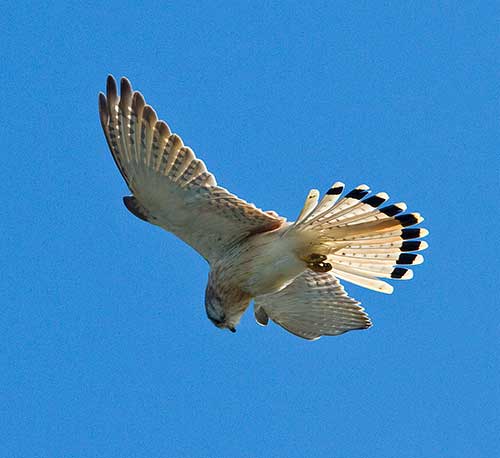
Still no build up of waterbirds with only a few species in ones and twos, Green Pygmy-goose and Purple Swamphen were probably the pick of what was around along with White-faced Heron and an Eastern Great Egret. Raptor numbers are also down with one Whistling Kite, one White-bellied Sea-Eagle and a Nankeen Kestrel perched in their favourite nest tree. 

Nankeen Kestrel      © K & L Fisher 2012

Red-necked Crake was heard on several occasions but not seen but several pairs of Buff-banded Rail were foraging along the edge of Bushy Creek and the cane paddock. Pale-vented Bush-Hen were heard out the back of our neighbours house calling in the evening. Channel-billed Cuckoo are still around and have been heard calling most mornings. Little Bronze-Cuckoo have been seen in small groups of 3-5 calling and chasing each other. Sooty Owl has been heard but not seen but several Eastern Barn Owl were seen. Buff-breasted Paradise Kingfisher are still quite vocal with adults calling mainly in the morning and at least one juvenile calling. They should be preparing to head north soon and we suspect some have already left. Blue-winged Kookaburra were spotlighted one evening as they were calling from a tree next to the Eastern Barn Owl daytime roost.

Blue-winged Kookaburra

A few Dollarbird have been seen but not calling and Noisy Pitta has been heard around the orchard area but not seen. Lovely Fairy-wren seem to be resident in a gully behind our neighbours garden being regularly seen here. Large-billed Gerygone were seen feeding a juvenile bird along Bushy Creek and Striated Pardalote were in fine voice calling all week. Another record equalling week for honeyeaters with again 14 seen and 1 heard, Black-chinned Honeyeater was again seen but a little further afield along McDougalls Road. Cicadabird are still calling and occasionally seen but the Grey Whistler are calling but not being seen often. Both Olive-backed and Yellow Oriole were calling and seen, the Yellow Oriole was around the Lodge grounds and has become a more frequent visitor over the last few years. Black Butcherbird has been lurking around in the rainforest for most of the week 

Black Butcherbird

and Northern Fantail has been a regular around the camp ground and across into Geraghty Park. A Willie Wagtail has taken up residence on our veranda! Seems to like dancing on the tables and leaving calling cards. A few Black-faced Monarch are still around but they should be gone soon on their journey north to Papua New Guinea. Pied Monarch was a notable absentee this week with no sightings or calls heard. Yellow-breasted Boatbill was around and seen well. At least one Grey-headed Robin was seen, it was a juvenile. Chestnut-breasted Mannikin were along the edge of Bushy Creek feeding on the grass seed which had just been sprayed by the farmer – hope they survive.

Further Afield:-
Mt. Lewis Road is still accessible and a few 2WD vehicle have gone up which is quite amazing at this time of year. The trip up has been well worth it for several guests who have seen up to 30 Blue-faced Parrot Finches in the area adjacent to the parking spot 10km from Bushy Creek. It is normal to see them at this altitude at this time of year and some sightings have been into May. Not all the finches are on Mt. Lewis as there were seen in the Mowbray National Park along Pinnacle Road in Julatten. 

Blue-faced Parrot-Finch

Other good sightings on Mt. Lewis included a male Golden Bowerbird further along the road from the parking area and at least four family groups of Chowchilla. Whilst there are not many raptors around Julatten a trip to Mareeba produced a Whistling Kite, two Eastern Osprey at a nest on Lake Mitchell, a Brown Falcon, two Nankeen Kestrel and nine Black Kite. Black Kite have been around all year which is unusual as they normally disappear in the wet season, probably to go inland to breed. 

Black Kite

Also on this trip a Dollarbird shot out from some roadside vegetation and was very nearly collected by our car, don't think we have seen one quite so low down. Along Euluma Creek Road in Julatten there were two Chestnut-breasted Cuckoo seen calling and a Large-tailed Nightjar calling early one evening, we did hear one at this location on 16/04/2011, so it is not too unusual.

Reptiles and Mammals:-

Not too much happening with the mammals and reptiles over the week. It took until Saturday night for a Striped Possum to make an appearance and that was in our neighbours garden. A Giant White-tailed Rat has been coming to the feeder but usually after 9.00pm. Only three frog species, Jungguy, Dainty Green Tree Frog and White-lipped Tree Frog were seen and one heard - Cogger's Frog. Two Australian Scrub Python (ex-Amethystine Python) were seen around the Lodge, one was seeking shelter in some tree roots under a tree outside the units after being mobbed by Blue-faced Honeyeater. Boyd's Forest Dragon are still around but becoming less frequent as the weather cools down.

Much Further Afield:-

A trip to Victoria was a welcome break and a chance to see a few new birds and catch up with some species we had forgotten about! We were not totally bird focussed but combined it with a bit of family history research on the Goldfields and some sightseeing. Good also to catch up with the team at Birdlife Australia in Melbourne. However, birding took up most of the time. Keith managed to get up to 651 with 8 new ones and Lindsay 630 with 9 new ones for the Australian list. Best birds were Malleefowl, Blue-winged Parrot, Rufous Bristlebird, Striated Fieldwren, Slender-billed Thornbill, Gilbert's Whistler and Southern Scrub-Robin, probably because they were all lifers! Anyway we did see lots of other good birds including five Hooded Plover on one beach 


Hooded Plover      © K & L Fisher 2012

and shall produce a full trip report when time permits. We did limit ourselves to a few places spending 3 nights at Little Dessert Lodge, The Grampians and The Otways which allowed us to explore these areas without rushing around. It was nice to see the Koalas at The Otways and to see the overseas visitors with big smiles on their faces when they saw one, great ambassadors for our country. 


Koala   © K & L Fisher 2012

On our last day we were privileged to be able to go to see the Helmeted Honeyeater (sub-species of Yellow-tufted Honeyeater) which is critically endangered. There is a dedicated band of volunteers helping others in trying to save this bird from extinction and we went along to observe their weekly monitoring of individual birds who are colour banded. 


Yellow-tufted Honeyeater - Helmeted Honeyeater (sub-species)   © K & L Fisher 2012

Thanks also to John Barkla for his hospitality and showing us around Werribee where we saw 90 species – great to see this amazing place after hearing about it for so long.

Note:- Due to time constraints the blog will become a bi-weekly publication - hope you don't mind! After upgrading to Windows 7 we are trying to get our programs up and running especially the photo ones which refuse to work - hence a few photos which you might have seen before.
All photos © K & L Fisher 2012.

Monday, 12 March 2012

Birdwatchers Lodge in Far North Queensland, Australia.

The blog is running slightly later this week due to computer problems – failure to load Windows XP and changing operating system over to Windows 7 which is very time consuming. On top of all this our network decided it did not like the new router and would not log onto the guest network for more than 10 seconds! Even a local IT specialist could not get what is normally a simple set up (even we've done them in the past) so at the moment we do not have Wi-Fi for guests, only the guest computer in the library. Also we are going away for a holiday! Just over two weeks in Victoria, birding and family history. Our friends Kath & Dave from Cooktown will be looking after the Lodge which is something they have done before. So no regular blog for a few weeks. Anyway onto this weeks happenings.

36mm of rain fell during the week 0.5 fell at the beginning of the week and 35.5mm fell on the last two days, in between it was dry, overcast and sunny. The minimum temperature was down to 21.4ºc and the maximum up at 30.4ºc. The humidity varied between 70% and 96%.

Bird species were hiding this week with only 85 seen and 11 heard. 18 mammal and reptile species were seen and three frog species heard. The weeks bird list is on the EremaeaBirds website and morning walk lists can also be found at this link on Eremaea Birds

Highlights:
The return of Bridled Honeyeater from higher ground up on the mountains with around 40 foraging in flowering eucalypts along McDougall Road, also along here was White-checked Honeyeater, another species we have not seen for several months. 

  
Bridled Honeyeater

Another returnee in the same location was a Northern Fantail. Rufous Fantail was again seen in the orchard for a second week and maybe the first of the returning bird who also come down off the mountains along with a few southern migrants.

Other sightings:
Pied Imperial and Topknot Pigeon are still around with up to 50 Topknots. Cattle Egret numbers are building up with many flying over the Lodge on their way to shepherd the local cattle. Four raptors around over the week, Black-shouldered Kite, pair of White-bellied Sea-Eagle, Whistling and Black Kite. Red-necked Crake have quietened down and were only seen once moving through the rainforest, did not see the juveniles. Scaly-breasted Lorikeet returned in good numbers as more trees have started to flower and Double-eyed Fig-Parrot have been flying over. Eastern Koel have become vocal and Channel-billed Cuckoo have been flying over but only still one or two. We have not seen the larger groups gathering, as in past years, before they head north. (Lesser) Sooty Owl was heard calling in the Lodge grounds twice during the night but no opportunities to track it down at a reasonable time. Eastern Barn Owl however were again around Geraghty Park but only one pair not the usual two pairs we normally see. 


Eastern Barn Owl

Azure Kingfisher has been zipping up and down Bushy Creek and through the rainforest. Noisy Pitta was only heard but more snail shells were found near it's “anvil”, a flat stone used the smash the shells against. Spotted Catbird have also gone quiet but have been feeding on berries from a vine behind the units which is better than stealing baby birds. 13 honeyeater species which is the best for a while; plenty of flowering trees. Interestingly a Macleay's Honeyeater was seen on the edge of the orchard rainforest and cane field with a band on its leg. We used to have one around the feeder for several years which was banded but this one disappeared about 18 months ago and was the only one that had been banded in the vicinity of the Lodge, maybe this was the same one as nobody has been banding around here for at least 7-8 years. Cicadabird are still around and calling as are Grey Whistler who have intensified their calling but they are keeping out of sight. Black-faced Monarch are still around and both Pied Monarch and Yellow-breasted Boatbill have been showing. 
 

Yellow-breasted Boatbill
 
Lemon-bellied Flycatcher have been hanging around the eucalypts on the edge of the Lodge grounds and coming down quite low.


Lemon-bellied Flycatcher

Metallic Starling numbers are still declining and Mistletoebird was seen in the orchard with a recently fledged juvenile.

Further Afield:-
A quick look at the Brady Road lagoon north of Mareeba turned up plenty of Magpie Goose, 50+ Plumed Whistling-Duck, a couple of Pacific Black Duck, one Australasian Grebe, one Little Black Cormorant, two Little Egret and Australian Hobby who was busy putting up the Magpie Goose and two Black-fronted Dotterel. There was also a crakey thing in the grass but not sure which one it was.

Reptiles and Mammals:-
Striped Possum were seen several times and heard growling and Fawn-footed Melomys, Yellow-footed Antichinus plus Northern Brown Bandicoot were at the seed feeder.


Yellow-footed Antichinus

Frogs were not very active, White-lipped Tree Frog decided to camp in our downstairs toilet block and Dainty Green Tree Frog fired up one night all calling in unison. A Brown Tree Snake decided to investigate our neighbour upstairs front room of their house but was persuaded to leave by a big stick!

Other Wildlife:-
This female Hercules Moth was found on the ground in the orchard and rescued. It was put in a place out of the way where all the guests could look at it. This moth is one of the largest moths in the world with a wing area of up to 14,000 square mm and are mainly found in the rainforest during the wet season. They fly like clumsy bats as we found out one night so time ago when we spotlighted one thinking it was a bat until it landed at our feet. They are not often seen with only one or two sightings in a year.


Hercules Moth - female

Sunday, 4 March 2012

Birdwatchers Lodge in Far North Queensland, Australia.


Well we had 208.5mm of rain this week and it was not even as a result of the Monsoonal Trough, which is still north of us hovering over Papua New Guinea and the top of Cape York Peninsula. Our rain came from the south-east and headed our way from off shore. It did flood the road to Mount Molloy for a day and flooded access to our water pump beside Bushy Creek. The overcast days kept the temperatures to a maximum 28.1ºc and the minimum up slightly on the previous week to a low of 22.3ºc.

The wet weather allowed fewer bird watching opportunities hence the lower than normal species number of 83 seen and 9 heard. 26 mammal and reptile species were seen. The weeks bird list is on the Eremaea Birds website and morning walk lists can also be found at this link on Eremaea Birds

Highlights:
An Eastern Spinebill turned up in one of our Grevillea's along Mt. Kooyong Road which is an unusual event. They are normally found up on Mt. Lewis more often than down around the Lodge. At last our Papuan Frogmouth was back in a Mango Tree in the orchard, roosting during the day, will she stay around? Red-necked Crake are still around with their 3 juveniles and calling infrequently.

Other sightings:
Orange-footed Scrubfowl have been active scrapping up debris and moving it across the road to the reception and onto their mound beside the road. Most of the debris has ended up on the road! This one was having a break from nest building duties to sit out in the sun in front of the cookshed.

Orange-footed Scrubfowl

The wet weather sent the waterbirds in all directions with few in the wetlands along McDougall Road. A few Magpie Goose were found perched in a tree with several Little Black Cormorant and an Intermediate Egret. Superb Fruit-Dove were heard but both Pied Imperial and Topknot Pigeon were seen. These Pied Imperial Pigeon were perched high in a Blue Quondong tree.


Pied Imperial Pigeon
A few Cattle Egret still in breeding plumage were accompanying cattle in a paddock along McDougall Road. Raptors were again absent with only one Whistling Kite seen and White-bellied Sea-Eagle heard. Pale-vented Bush-hen were again see in in the gully behind our neighbours house and heard calling from several other areas around the Lodge. Three Bush Stone-curlew were resting up for the day under some trees near the local nursing home and a pair of Double-eyed Fig-Parrot were seen flying over in the same area.


Bush Stone-curlew

Channel-billed Cuckoo are still around but less than five seen and heard. Other cuckoos around were Little (Gould's) Bronze-Cuckoo and Brush Cuckoo. Eastern Barn Owl were again in Geraghty Park but no records of Sooty Owl this week. Still one Buff-breasted Paradise-Kingfisher nest with chicks in but juveniles from other nests are growing fast and calling for food all day long. The parent birds are very obvious as they search for food, surprisingly some are still in very good condition with long straight tail streamers at a time when they are unusually damaged or bent from going in and out of the nest chamber for at least 6 weeks. Noisy Pitta was heard but not seen but Spotted Catbird have been seen. Red-backed Fairy-wren were again along McDougall Road while Lovely Fairy-wren were in our neighbours garden near Bushy Creek. Twelve honeyeater species for the week including the previously mentioned Eastern Spinebill and several views of the spectacular Scarlet Honeyeater. This Graceful Honeyeater was sitting on the ground for no apparent reason; it soon moved and flew up when approached.

Graceful Honeyeater

A pair of Cicadabird were on the edge of the orchard late on Saturday afternoon flying around and calling as they enjoyed the sunny conditions.


Cicadabird - male

Black Butcherbird have been around in the rainforest and a pair of Willie Wagtail were taking advantage of the newly mowed orchard to search for insects. Black-faced Monarch are still calling and spending most of their time foraging in the rainforest canopy unlike the Spectacled Monarch who are foraging down to ground level. A pair of Pied Monarch were bathing in Bushy Creek early in the week before it flooded and Yellow-breasted Boatbill have been very active and calling a lot in the rainforest. Lemon-bellied Flycatcher have been calling also and foraging in and around the Queensland Blue Gum in Geraghty Park and the edge of the Lodge grounds. Metallic Starling are still with us but numbers are still dwindling as some head north to Papua New Guinea.

Further Afield:-
Wet weather has caused the temporary closure of the Mt. Lewis road (beyond the gate). This will not effect our guests as this part of the road is a permit only area and they only need to go to the clearing at the 10km mark, the gate is a few hundred metres beyond here. The area around the clearing and the walk to the miners dam has been producing many of the higher altitude endemic species such as Fernwren, Atherton Scrubwren, Mountain Thornbill, Macleay's Honeyeater, Bridled Honeyeater, Grey-headed Robin, Chowchilla, Bower's Shrike-thrush, Victoria's Riflebird, Tooth-billed Bowerbird and a female Golden Bowerbird plus Blue-faced Parrot-Finch at the clearing.


Blue-faced Parrot-Finch

Also on Mt. Lewis was Rufous and Grey Fantail plus sub-species Keasti. With the rain of the last week this part of the road may well become impassable as well but in any case four-wheel drive will be required. The small wetland at Brady Road, Mareeba had quite a few waterbirds plus juvenile White-bellied Cuckoo-shrike and Dollarbird. Also here was a displaying Horsfield's Bushlark which was high above the wetland. There are still plenty of Black Kite along the road from Mount Molloy to Mareeba, which is still surprising as normally most of them have gone inland however quite a lot of the inland is also very wet.

Reptiles and Mammals:-
The wet weather has certainly enticed a few more reptiles and mammals to come out of hiding with 26 seen this week which is more than we have had for most of the year. A nice 2.5m Australian Scrub Python (used to be called Amethystine Python) was crossing the road near our two bedroom units and a Brown Tree Snake was found by the birds coiled up on a callistemon outside the cookshed. A Northern Leaf-tailed Gecko was found during a nightwalk early in the week; the first for several months. Five frog species were found plus cane toads which were collected for disposal, humanely. Striped Possum were seen on three occasions which was the best sightings around the Lodge grounds for over a month. Fawn-footed Melomys, Yellow-footed Antichinus, Bush Rat, Giant White-tailed Rat and Northern Brown Bandicoot were all visitors to the seed feeder near the reception area in the evening. This is a Fawn-footed Melomys at the feeder, they look very cute but don't be fooled, as they love getting into vehicles and chewing the plastic wiring and hose pipes!

Fawn-footed Melomys

Must have been a good week for pythons as we found two more on a property along Euluma Creek Road, one was at least 3m long and quite thick the other one which was nearby was only about 2m and quite thin, great to see them around.