Showing posts with label Fairy-wren. Show all posts

Sunday, 1 July 2012

1st July 2012 Kingfisher Park Birdwatchers Lodge


This is our 200th blog posting -  a big thank you to all our loyal followers for encouraging us to keep going with it and all the positive feed back..

The first week was dry and the second week was wet with annoying drizzle resulting in 9mm. The top temperature was 22.2ºC with the majority of days around the 21ºC mark and the minimum was 10.8ºC – brrr! The humidity was high up to 97% and down to 76%.

Bird sightings for the first week were a high 107 seen plus 2 heard only. The second week had slightly less sightings due mainly to the inclement weather, 96 seen plus 3 heard. Mammal and reptile species were slightly more than the last two weeks – 26 species were seen over the two weeks. The last two weeks bird lists are on the Eremaea Birds Website for Week1 and Week2 plus morning walk lists can also be found at this link on Eremaea Birds

Highlights:
A few this past two weeks. How could you beat the Noisy Pitta who turned up at the reception area feeder and promptly ate a piece of banana that the honeyeaters dropped! We gave him/her a bit more and later on it hopped up onto the feeder to help itself. The pitta then jumped up onto the water bowl for a drink. It became a regular visitor for over a week, but once the rain/drizzle set in this week it left and we have only heard it calling from the rainforest, so it must be finding enough food in the natural world. 


Noisy Pitta

A rufous morph of the Tawny Frogmouth turned up for three days and was probably the same bird which has shown over the past two years for a short period. An adult Papuan Frogmouth was spotlighted in the orchard whilst on a night walk which was the first sighting for at least three months. A Red-necked Crake appeared at the crake pool late one evening, but was not seen again. This is the first sighting since mid-February. A male Yellow-throated Scrubwren was seen foraging in the rainforest on the edge of the orchard, this was the first for the year. We normally get one or two each year who migrate down from the mountains behind the Lodge. A Black-faced Cuckoo-shrike was along McDougall Road which is uncommon, they are more common back towards Mt. Molloy in the drier woodlands.

Other sightings:
A Wompoo Fruit-Dove appeared for a few days, decided there was not enough in fruit and disappeared, but the returning Brown Cuckoo-Dove found plenty to stay for over the two weeks. Australian Owlet-nightjar was seen on one day peering out of its daytime roost which was the first time for several months. The adult and juvenile Black-necked Stork are still around and have been seen flying over the Lodge on several occasions. Carol Iles, our next door neighbour and bird guide, reported that the two Black-shouldered Kite nesting along McDougalls Road now have two fledglings begging for food which is great news. Other raptors in the area have been White-bellied Sea-Eagle, Whistling and Black Kite, Brown Goshawk, Collared Sparrowhawk, Nankeen Kestrel and Australian Hobby which is quite a good collection. The Barking Owl pair reported in the last blog are still with us and heard most days calling during the night and just before dusk and dawn, even one of our neighbours heard them and complained they had woken him up! Azure Kingfisher was once again seen along Bushy Creek after no sightings for a month. The pair of Spotted (Green) Catbird reported last blog are still coming into the feeder, but not regularly. 
 

Spotted Catbird

Red-backed Fairy-wren were seen along McDougall Road after a month of no sightings. Brown Gerygone have been venturing into our orchard area which is quite unusual, normally we just see the Fairy Gerygone. Once again we have recorded 12 species of honeyeater for each of the past two weeks plus we have been hearing Black-chinned Honeyeater in several locations adjacent to the Lodge. Lewin's Honeyeater continue to arrive at the feeder showing off their distinctive crescent shaped yellow ear patch and blue eye.

Lewin's Honeyeater

A Golden Whistler was see at the local Barramundi Farm this week which was an odd habitat for it and Bowers Shrike-thrush was along McDougall Road. Grey and Rufous Fantails are still around in good numbers, this one was foraging on the ground in the camping area.


Rufous Fantail

White-eared Monarch are still around as we have been hearing them, but unable to track them down for views. Pied Monarch and Yellow-breasted Boatbill are still very active and showing well. This Pied Monarch was in the orchard checking out the fruit trees.
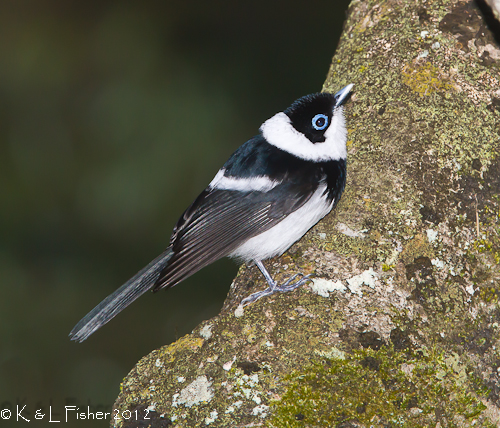

Pied Monarch

Both Fairy and Tree Martin were seen this week and several Australian Pipit are still around.

Further Afield:-

Carol Iles, (who guides in areas away from the Lodge for us) reported at least 40 Diamond Dove along West Mary Road at Maryfarms between Mount Molloy and Mt. Carbine. This is very unusual both in location this far east and in numbers; whilst we have recorded them in this area before, there has only been one or two birds and few sightings. This prompted a trip to the area the following day. There were at least 16 Diamond Dove along the West Mary Road along with 16 Australian Bustard for which this area is a regular sighting spot.


Australian Bustard

A juvenile Brown Falcon was along this road perched in a tree before it swooped onto the ground and returned to the perch clutching a stick. It played with the stick for several minutes before flying off and dropping it, then returned to the tree where it had trouble getting balanced as it flew into the wind. Not sure what it was doing with the stick. 

Brown Falcon - juvenile

Brown Falcon - with stick


Brown Falcon - trying to land into the wind
 
A Black-shouldered Kite was also along the road perched in a tree preening and surveying the surrounding area. 
 

Black-shouldered Kite

Further back towards Mt. Molloy at Luster Creek there were many Bridled Honeyeater and a male Cicadabird which was a surprise as over seven years we have had less than 10 sightings around the Lodge in June/July. Red-tailed Black Cockatoo and Pale-headed Rosella were seen in Julatten just outside our 1.5km lodge area.

Del Richards from Fine Feather Tours had a few interesting sightings on his travels, Chestnut-breasted Cuckoo and White-eared Monarch near the Julatten school, a Red-backed Button-quail on the Lake Mitchell causeway (between Mt. Molloy and Mareeba), Little and Black-faced Woodswallow north of Mt. Carbine and a Fan-tailed Cuckoo at Luster Creek. Brown-backed Honeyeater were near Abattoir Swamp after an absence of nearly two months and a Tawny Grassbird was also in this area. At the swamp were Bridled Honeyeater.

Reptiles and Mammals:-
Highlights for this blog were a Green Ringtail Possum with a half grown baby on its back, great to see they are breeding in the Lodge grounds and Striped Possum have been showing occasionally. 


Green Ringtail Possum - with baby

A Short-beaked Echidna (large spiny animal like an overgrown Hedgehog but an egg laying Mammal) was digging in the camp ground near one of our guests tents one night. This is the first sighting for about 18 months in the Lodge grounds. Platypus was seen in Bushy Creek one morning at 7.50, this is the first sighting since early February. Yellow-footed Antichinus was seen emerging out of a hole in one of the support poles for the cookshed roof and later seen during the day stealing banana from the birds, who were going crazy trying to chase it off. A few frogs came to life with the damp weather, Jungguy Frog, White-lipped Tree Frog, Roth's Tree Frog and Cogger's Frog along with a few Cane Toad. Northern Leaf-tailed Gecko have been appearing with at least four different individuals seen and at least one Boyd's Forest Dragon has been active and appearing around the feeder. The dragon showed up one morning on a chair leg outside the reception area making the most of a shaft of sunlight hitting it. 


Boyd's Forest Dragon

Other Happenings:- We put together a display of photos with the theme "Birdscaping Your Garden" for the Birdlife North Queensland group


Birdlife NQ display

This was part of a display put on at the Trees for Evelyn and Atherton Tablelands (TREAT) nursery at Lake Eacham to celebrate their 30 years of planting trees on the tablelands, quite an achievement. They now plant over 30,000 trees a year. There is a connection to Kingfisher Park B.L. as Joan Wright was a founder member of TREAT and also part of a group called The Koorawatha Society who had ideas to convert the grounds of what is now Kingfisher Park B.L.  In the late 1960's this is what their vision was:


Luckily for us there was not the finance to carry this through and some of the rainforest has been preserved.


Sunday, 10 July 2011

10th July 2011 Report


After last weeks 20mm of rain we had none this week. The overnight temperatures were cooler than last weeks with a minimum of 12.2ºc and a slightly warmer maximum during the day of 20.9ºc. Again great birding weather.

Bird species recorded were 92 seen and 4 heard. Reptiles and mammals were 24 which was up on previous weeks and the best total for a while, due to greater observer effort over the week.
The weeks bird list is on the Eremaea Birds website.

The most bizzare record this week was a Cattle Egret in the mouth of a cow! This was reported by two of our guests, Marilyn and Rob, who saw this happening along the nearby McDougall Road. They said that the Cattle Egret was dead in the mouth of the cow when they arrived so they could not say whether the cow was responsible for killing it. The cow was holding the egret by the neck and shaking the egret from side to side before dropping it and repeating this several times over a couple of minutes. The cow then dropped the egret and a Whistling Kite, which was sitting in a nearby tree watching and waiting for its turn at the egret, pounced to get its share. Strange behaviour but maybe the cow was getting revenge on those pesky egrets that keep hanging around its feet!

The most unusual record was a Brolga circling over the Lodge grounds which was heard trumpeting but not seen, luckily Del Richards from Fine Feather Tours was present at the time to back us up on the call which is pretty distinctive anyway. This is only the second record of Brolga flying over the Lodge in six years. A Brolga was reported at Shannonvale, near Mossman, the same afternoon and could have been the same bird. Also unusual was a Royal Spoonbill flying over a cane paddock with a very large stick in its claw heading south-west. This would suggest it was building a nest in the area which would be very unusual, we have not heard of any nest building in our area and with all the rains and flooding in central areas of Australia we would have thought spoonbills would already have bred fairly recently. Normally they breed between September and March and in colonies with ibis, egrets and herons. The two lagoons along McDougall Road had a few more waterbirds on them this week, Magpie Goose, Wandering Whistling-Duck, Green Pygmy-goose, Pacific Black Duck, Australasian Grebe, Little Pied Cormorant and Comb-crested Jacana. 


Comb-crested Jacana

Three Brown Cuckoo-Dove have been around the Lodge and a lone Emerald Dove returned after a four week absence. Topknot Pigeon continue to overfly the Lodge as they have done for nearly a month now. The female Papuan Frogmouth, which was by the reception for a few days last week, disappeared towards weeks end and this week a female turned up roosting in a Mango Tree in our orchard and has been in the same spot all week. An Australian Owlet-nightjar was seen once at the beginning of the week peering out of its daytime roost and a Black-necked Stork flew over McDougall Road at the end of the week. A single White-necked Heron was seen perching in a tree across the Rex Highway opposite Geraghty Park and two White-faced Heron flew over Geraghty Park whilst we were on a morning walk, one was an adult and the other a juvenile. Australian White Ibis were seen several times flying over the Lodge and on the ground at the nearby Barramundi Farm where up to six birds were seen. White-bellied Sea-Eagle were still being harassed by Black-shouldered Kite and Whistling Kite. Black Kite numbers have increased as cane cutting gets under-way in the area. One Red-necked Crake was briefly seen scurrying across one of the roads in the camp ground on its way to the far side of Mt Kooyong Road. Sulphur-crested Cockatoo numbers have also increased as they like to get stuck into the cane stems along the edge of the plantings. Five Double-eyed Fig-Parrot flew out of a fig tree along Bushy Creek one morning and over the Lodge grounds. (Lesser) Sooty Owl was again heard on several occasions, usually giving one call and going quiet so we cannot track it down. Eastern Barn Owl were out in force with seven individuals seen on one night, one group was probably two adults and three juveniles. The following day one Eastern Barn Owl was found roosting 2m off the ground in a shrub on the edge of Geraghty Park, unable to find a roost hollow for the day. 


Eastern Barn Owl

Azure Kingfisher has been a regular at the Crake Pool all week but no sign of the Little Kingfisher which was frequenting this location. Spotted Catbird has been coming to the feeder again and also our neighbours feeder. A group of Red-backed Fairy-wren we in the same area as last weeks sighting behind the Geraghty Park Community Hall, this time there was a male with 4-5 female/juveniles. No Brown Gerygone this week so they might have moved on, yes we know we have said this before and they return the next week! Same 11 honeyeater species as the past five weeks but with more eucalypts flowering we are hopeful of a few more species turning up. Blue-faced Honeyeater was more noisy than normal a feeding in an Umbrella Tree.


Blue-faced Honeyeater

White-bellied Cuckoo-shrike have been very active as have Varied Triller. Yellow Oriole are still with us and actually showing well this week, Olive-backed Oriole were only heard. Several sightings of Black Butcherbird, one a brown bird and the other a black bird skulking around in the rainforest. There only seems to be one Spangled Drongo around at the moment which is roosting behind the units and makes sure everyone knows he is there by making a lot of noise on dusk. Northern Fantail has again been in the Lodge grounds and a male Leaden Flycatcher has been around Geraghty Park. An adult Black-faced Monarch was foraging in the rainforest near the crake pool and is one of the few which overwinter instead of returning to Papua New Guinea to the north. A pair of Pied Monarch have been around the Lodge as have several Yellow-breasted Boatbill calling most mornings. This one was showing very well.


Yellow-breasted Boatbill


The female Victoria's Riflebird reported over the last few weeks has been around the edge of Geraghty Park and in the Lodge grounds. Just a single Bassian Thrush seen this week after having four the week before.

It was a great week for mammals and reptiles/amphibians as we did several spotlighting trips in ideal conditions and ended up with 25 species. Our South American Sapote tree started flowering and attracted Spectacled Flying Fox, Tree Mouse and two adult Striped Possum. A juvenile Striped Possum was also seen in the rainforest which was good news. 


Striped Possum - in sapote
 
A Platypus was seen in Bushy Creek late one afternoon and a Feather-tail Glider was seen climbing up a Coconut Palm one evening. Despite the dry weather we saw 9 frog species including Roth's Tree Frog, Cogger's Frog, Jungguy Frog and Peter's Frog. One large 4m+ Amethystine Python was in our neighbours garden and the first one seen for a few weeks. A Northern Leaf-tailed Gecko has been showing well over the last two weeks and this image shows what masters of disguise they are.


Northern Leaf-tailed Gecko

Further afield Blue-faced Parrot-Finch have appeared in the last week in the area with a maximum of five birds reported on private property. David “Chook” Crawford from Close Up Birding Adventures reported fluffy Magpie Goose chicks at Lake Mitchell (other names: Quaid's Dam or Southedge Lake) which is a late breeding record, he also had two Banded Honeyeater at Mt. Molloy. Banded Honeyeater have turned up at Mt. Molloy most years following the flowering gums. Squatter Pigeon have been regularly seen in Mt. Molloy and Black-throated Finch were along Quaid's Road opposite Lake Mitchell. A Barking Owl was heard calling near Abattoir Swamp which was the first we have heard of this close to the Lodge (6km) in 17 months, also in this area was an immature Black-faced Monarch, which must have been a result of late breeding. White-cheeked Honeyeater were also seen near Abattoir Swamp feeding in flowering eucalypts.


White-cheeked Honeyeater

Victoria's Riflebird has been along McDougall Road feeding on Tulipwood seeds, this image illustrated the pendulous nature of the seed pods.


Tulipwood  Harpullia rhyticarpa

Only a mother could like this youngster! Guess what it is, not too difficult!


Guess who I am
Answer next week.


Sunday, 17 April 2011

17th April 2011 Report

 
Wow what a week of fantastic weather! The best we have had all year with beautiful sunny dry days and a temperature range of 17.2ºC to 26.5ºC, ideal. At last it has started to dry out with only 2.5mm of rain at the beginning of the week. This means we have been able to open up the camp ground but unfortunately the bunkhouse is still closed with renovations required to get it back up and running. Bird species recorded were 98 seen and 4 heard, reptiles and mammals were 16 seen.

The weeks bird list is on the Eremaea Birds site.

Victoria's Riflebird - female

This week certainly saw a movement in bird species with a first for the Lodge grounds, a Northern Fantail was foraging around in the rainforest! Normally an open forest dweller in the dryer areas out towards Abattoir Swamp and occasionally in Geraghty Park. An Eastern Osprey was reported near the Barramundi Farm, this species was fairly regularly seen in the area up until about 6-7 years ago but no sightings since then until this one. The Bower's Shrike-thrush reported in Geraghty Park two weeks ago was seen there again this week. A V-formation of Ibis flew high over the Lodge grounds towards the coast, whilst we were looking at a Pacific Baza which was perched on top of the rainforest canopy. The formation consisted of 12 Australian White Ibis and two Straw-necked Ibis, the first we have seen this year. In fact Ibis have been few and far between this year as presumably they have been inland breeding in the flooded wetlands. A female Victoria's Riflebird was pulling back bark on a rainforest tree whilst we were looking at the Northern Fantail, thanks to David and Michael for drawing our attention to the fantail. A Tawny Grassbird was heard in the cane field near the Mt. Kooyong Nursing Home and was the first for the year.

The fruiting palm tree in our neighbours garden reported last week was still attracting good birds including a Superb Fruit-Dove. A lone Papuan Frogmouth was seen once in the orchard perched at the edge of the rainforest. The regular pair of White-bellied Sea-Eagle were seen flying past with a fish from the Barramundi Farm early one morning before perching in a tree across the Rex Highway and devouring it. A Grey Goshawk was around at the end of the week in our neighbours garden. Red-necked Crake and Pale-vented Bush-hen were heard but not seen. The female Eastern Koel reported last week in a palm tree on Mt. Kooyong Road stayed there until the end of the week when the supply of fruits was exhausted. The (Lesser) Sooty Owl continued calling well over the week but again not seen and a quick check of the Eastern Barn Owl in Geraghty Park found what looked like a juvenile barn owl perched on the edge of the roost tree. This bird had a very dark facial disc but was too small to consider Masked Owl. We are not sure if the barn owl are using the roost tree at the moment as a Sulphur-crested Cockatoo was peering out of the hole one morning with a second bird perched nearby, we will try and check it out one evening in the coming week. An Azure Kingfisher was foraging in a small pond on the edge of the orchard and flew past within 1m. The last sighting of a Buff-breasted Paradise-Kingfisher was on the 14th when an adult flew across the road at the rear of the bunkhouse. A Sacred Kingfisher was in Geraghty Park for one morning and could have been the one reported last week from nearby McDougall Road. This Rainbow Bee-eater was foraging from a barbed wire fence adjacent to the neighboring cane field in the late afternoon and was joined by several others before heading off to roost for the night. 


Rainbow Bee-eater - female

Still at least one Dollarbird around during the week and a Noisy Pitta was seen once in the Lodge grounds as well as being heard on several occasions. Brown Gerygone continue to stay in the Lodge grounds and hopefully will become resident. Eleven species of honeyeater this week including this Yellow Honeyeater in one of the African Tulip trees in Geraghty Park. Note that the bird has pierced the base of the flower to get the nectar out.


Yellow Honeyeater

At least two Bridled Honeyeater continue to seek nectar in the tulip trees. A pair of White-throated Honeyeater were seen pulling pieces of bark of a paperbark tree in Geraghty Park and flying off with it, presumably building a nest nearby. A Yellow Oriole was heard and seen foraging along the edge of Geraghty Park and in the Lodge grounds. Rufous Fantail numbers appear to have increased during the week with several pairs seen in the rainforest of the Lodge grounds. A male Leaden Flycatcher was foraging along the edge of the neighboring cane field and perching in the cane.


Leaden Flycatcher - male


A very juvenile Grey-headed Robin was foraging on the road into the Lodge before flying back into the rainforest one afternoon. 


Grey-headed Robin - juvenile
   
The African Tulip trees in Geraghty Park were also attracting a pair of Olive-backed Sunbird and both Red-browed Finch and Chestnut-breasted Mannikin were seen carrying nesting material.


Olive-backed Sunbird
 
A Long-nosed Bandicootrainforest after raiding one of the fruit trees in the orchard. A least three Boyd's Rainforest Dragon have been around the units; one has taken a liking to eating banana. Major Skink are being seen infrequently with one appearing to be living under the eating area decking.

Further afield an overnight stay on a property along Euluma Creek Road, Julatten proved very rewarding with species seen including a family of Lovely Fairy-wren, one male and at least four female/immature male foraging through the undergrowth. 


Lovely Fairy-wren - male
  
Above them were a couple of Black-faced Monarch foraging through the mid-upper canopy. 


Black-faced Monarch


A full species list can be found on the Eremaea Birds website. At the end of the week a Large-tailed Nightjar was heard on this property making its distinct chop-chop call, first heard for the season. A male Golden Bowerbird flew across the Mt. Lewis road about 14km from Bushy Creek, this has become a rare sighting over the last few years. Two Spinifex Pigeon were seen at Granite Gorge Nature Park 12km west of Mareeba on 7th April, this record with image can be seen on the Eremaea Birds website. This is the most easterly record we have heard of, the closest they normally occur is further west in the Mt. Surprise-Georgetown region.

Dragonflies were again spotted around the district, two shown below are a Blue Skimmer and a Sapphire Flutterer which is normally seen fluttering around the upper canopy, this one was enjoying the sunny weather.


Blue Skimmer

Sapphire Flutterer


Sunday, 10 October 2010

10th October 2010 Report


Temperatures this week were similar to last week 21.0-27.4ºC, as was the rainfall with 16mm spread over 3 days. Sunny periods amongst the overcast conditions allowed the birds to be more active and obvious Bird sightings were slightly down on last week but considering the weather conditions they were quite good with 81 species seen and 10 heard. Mammals and reptiles were 20 species seen, one less than last week. 


A few species turned up this week which we had not seen for a while around the area, Brahminy Kite was flying over the Rex Highway near Geraghty Park, a Pale-vented Bush-hen was also crossing the highway near McDougall Road (about 1km away towards Mt. Molloy), at least two Australian King-Parrot were around the lodge grounds for two days, (the image below shows two juvenile A. King-Parrot having a rest).


 Australian King-Parrot


Two female Red-backed Fairy-wren were foraging on grass alongside the highway opposite Geraghty Park, a Noisy Friarbird was foraging in grevilleas in the Lodge grounds for two days and a Northern Fantail was flitting around the edge of the Lodge grounds along Mt. Kooyong Road one morning. All these species have not been recorded for at least two months.


Other observations of interest during the week were continued calling of several Superb Fruit-Dove in the Lodge grounds, but still unable to track one down! Two Pied Imperial Pigeon flew over Mt. Kooyong Road during a morning walk and Topknot Pigeon numbers continue to build up. Papuan Frogmouth has been calling every night and seen once perched over the cook shed calling. Not been at the regular roost area in the orchard this week so must have found another quieter spot. Australian Owlet-nightjar was calling early one morning at the start of a morning walk, but not found. A single Little Black Cormorant was fishing in Bushy Creek one morning, spotted on a morning walk. Pacific Baza continues to sit on a nest and a Brahminy Kite was flying over Geraghty Park in the vicinity of an old Brahminy Kite nest which has not been used for several years. A Bush Stone-curlew has been taking advantage of the uncut sugar cane to roost in it during the day, but that can't last for long as the cane will be harvested soon. Double-eyed Fig-Parrot were seen twice over the week, once in the Lodge grounds and then near the neighboring nursing home foraging in a Cluster Fig. Noisy Pitta continue to be noisy and seen around the grounds, sometimes with a lot of searching. Spotted Catbird are not popular at the moment and are being chased off by nesting birds, especially Spectacle Monarch trying to protect their eggs and chicks - catbirds are great nest robbers. The White-throated Gerygone was again in Geraghty Park at the beginning of the week, but not heard towards the end. A Noisy Friarbird was calling over several days as it fed in some grevilleas, they are occasional visitors to the grounds. White-bellied Cuckoo-shrike have been active in Geraghty Park, gleaning insects and taking nectar from the flowering callistemons (Bottlebrush). 


White-bellied Cuckoo-shrike


Barred Cuckoo-shrike are around as are Cicadabird with both male and female seen well. At least one Rufous Fantail is still around and Black-faced Monarch are calling well and being seen mainly when bathing in Bushy Creek. A Pied Monarch was seen along Bushy Creek collecting nesting material from some introduced bamboo near the nursing home. 


 Pied Monarch


A full bird species list for the week can be found here

Spotlighting was curtailed somewhat by inclement weather arriving at when it was time to go out, however, one trip produced excellent views of a Striped Possum and a sleeping Boyd's Forest Dragon hanging onto the side of a small tree. Earlier in the week the wet weather triggered masses of flying termites to emerge from their nest mounds and this Boyd's Forest Dragon had a field day lapping up the insects as they emerged. 


 Boyd's Forest Dragon on termite mound


Boyd's Forest Dragon

 
Also feeding on the termites were Red-browed Finch. Platypus are still being seen regularly in Bushy Creek along with several Eastern Water Dragon.

Further afield the Mt. Lewis road was having some roadworks performed on it, trying to fill in the holes after the wet weather. Several ground thrush were seen, but not identified on Mt. Lewis but they were probably Bassian Thrush, the status of Russet-tailed Thrush on Mt. Lewis has yet to be resolved 100%. Despite some field guides saying you can tell them apart by the amount of white in the tail this is not so, the white outer tail feather patches are very variable in size in both species, some birds show no white. Australian Bustard continue to put on a show at Maryfarms with their display antics as do the Great Bowerbird in Mount Molloy who are also displaying